2026
Acoustic detection of a rarely vocalising invasive mammal from sparse data
bioRxiv · Preprint
Samuel R.P-J. Ross
Community ecology · Global change
I study why some ecosystems remain stable or can rapidly recover from environmental change, while others collapse.
I’m an Associate Professor at the Hakubi Center for Advanced Research and Graduate School of Agriculture, Kyoto University, Japan. My research combines ecological concepts and methods with high-resolution data to understand the mechanisms underpinning ecological stability.
環境変化に直面しても安定性を保ち、速やかに回復できる生態系と、そうでない生態系の違いは何か。生態学的な概念・手法と高解像度データを組み合わせ、生態系の安定性を支えるメカニズムを研究しています。
Understanding biological insurance mechanisms, such as how differences among organisms’ responses to environmental change can generate stability.
環境変化に対する生物の応答の違いが、どのように生態系の安定性を生み出すのか、その生物学的な仕組みを研究しています。
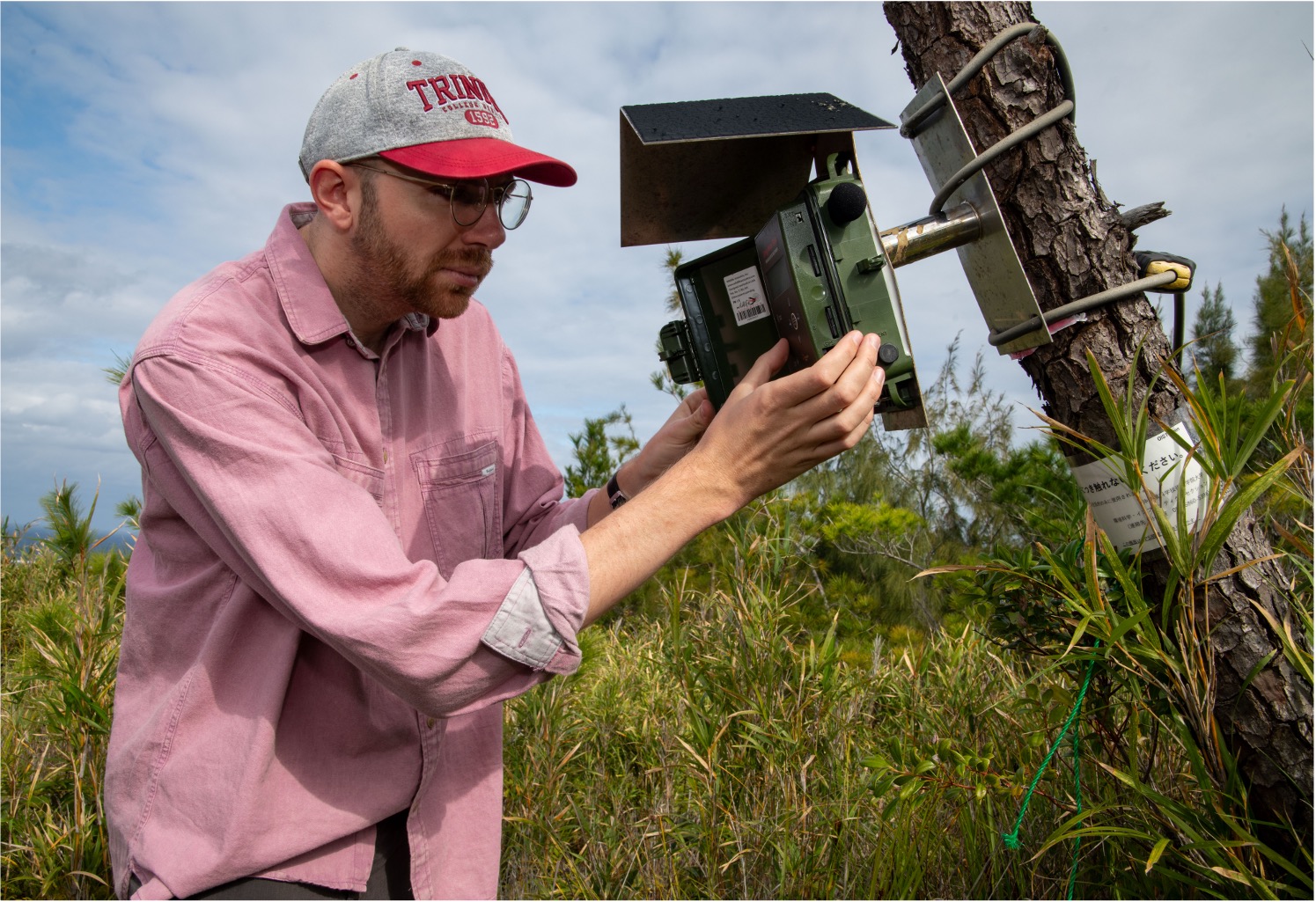
Using passive acoustic monitoring of natural soundscapes to observe ecosystem dynamics across spatial and temporal scales relevant to ecosystem management.
自然の音環境を長期・広域にモニタリングし、生態系の動態や安定性、環境変化への応答を明らかにします。
bioRxiv · Preprint
bioRxiv · Preprint
bioRxiv · Preprint
Hakubi Center for Advanced Research & Graduate School of Agriculture, Kyoto University · Kyoto, Japan